Astronomy for Everyone!
The Journey of Telescopes: From Galileo to Modern Astrophysics
E
Telescopes, discoveries, astronomy – these three terms are inseparably linked. Have you ever wondered how our view of the universe has changed over the centuries? From the first simple devices used by Galileo Galilei to the powerful satellites that explore the depths of space today, the development of telescopes offers a fascinating insight into the history of astronomy and the ongoing quest for knowledge.
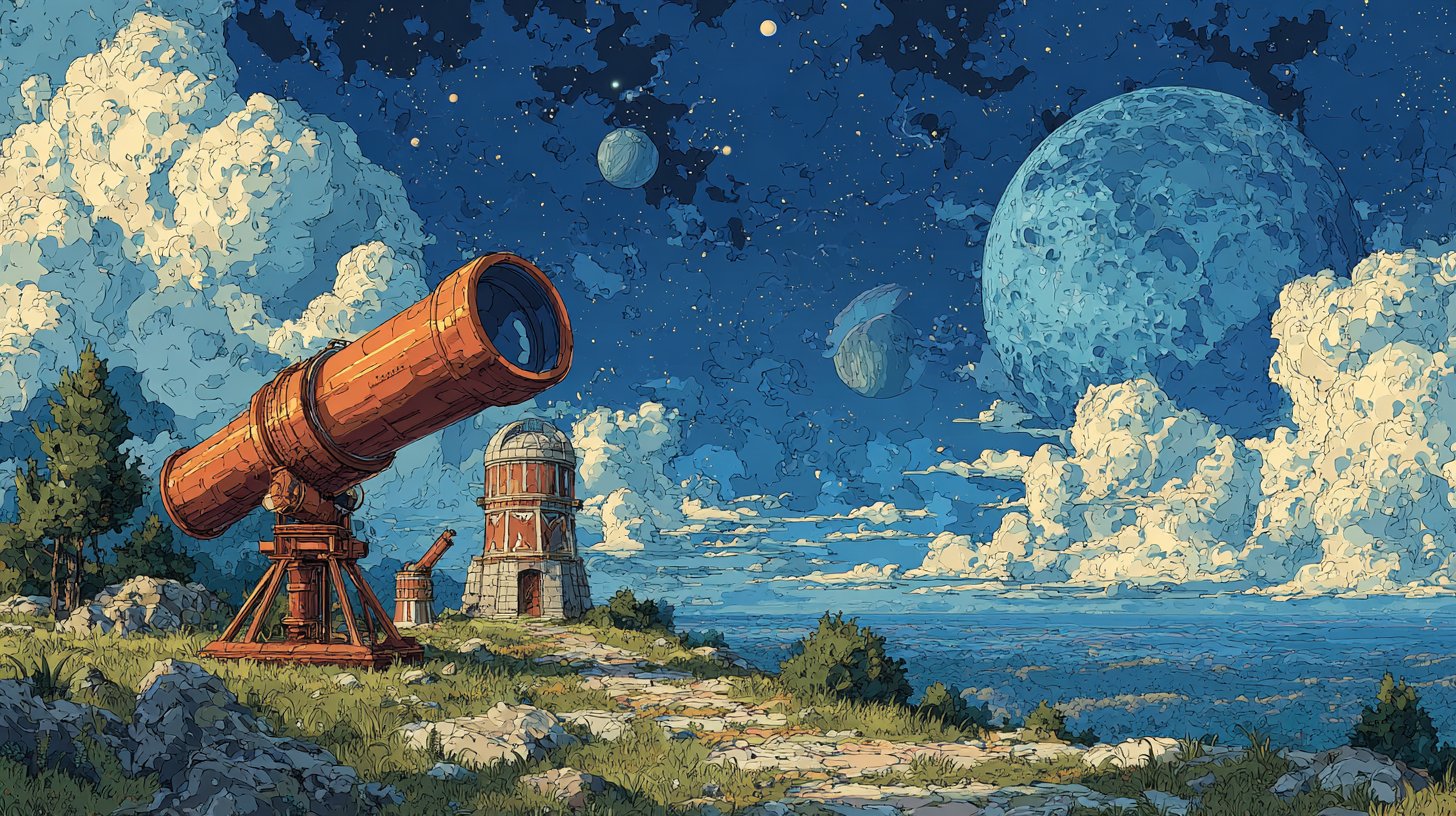
Let us begin our journey in the 17th century when Galileo Galilei constructed the first telescope and made revolutionary discoveries with it. With his device, he was able to observe not only the four largest moons of Jupiter, known as the Galilean moons, but also the phases of Venus and the cratered surface of the Moon. These observations disproved the geocentric worldview, which asserted that the Earth was the center of the universe. Galileo thus opened a new horizon for science and showed that humanity does not have to be the center of the cosmos. His discoveries were not only groundbreaking but also led to fierce conflicts with the church, which defended the traditional worldview.
Advancements in the 19th Century
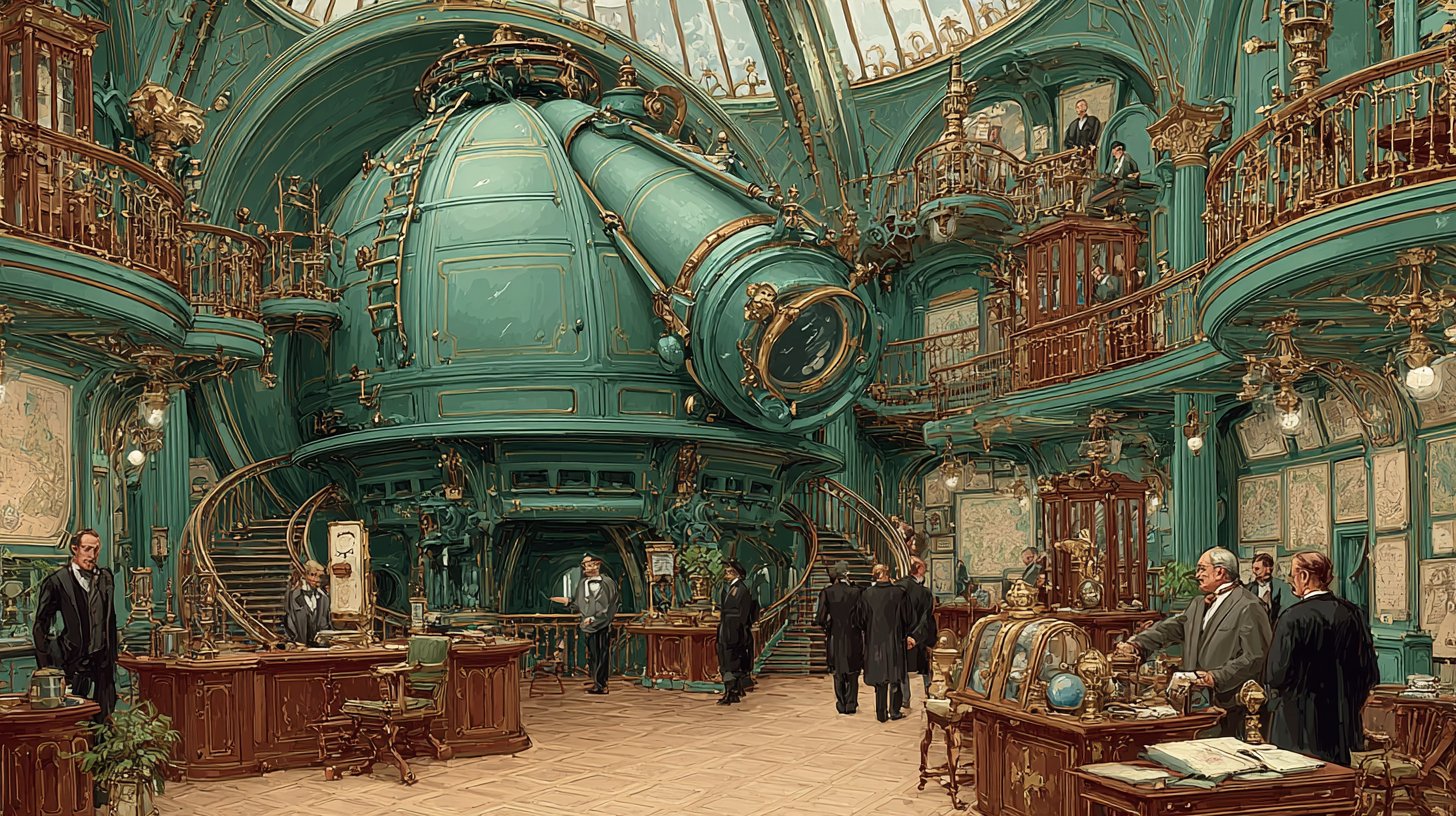
In the 19th century, telescope technology experienced significant advancements. The introduction of special lenses and improved mirrors allowed astronomers to see even clearer images of the night sky. A prominent example from this time is the 40-foot telescope constructed by Sir William Herschel in 1868, which was considered one of the largest of its time. With this telescope, nebulae and many new stars were discovered, greatly expanding our understanding of the universe. During this time, the first photographs of celestial scenes were also taken, which allowed details that were not visible to the naked eye to be seen. The enormous technological progress led to an explosion of astronomical knowledge and laid the foundation for modern astrophysics.
At the same time, interest in spectroscopy emerged, which allowed for the analysis of the chemical composition of stars. This led to further discoveries, such as the identification of hydrogen and helium in stars and in the Sun. The combination of these new techniques and devices led to a deeper understanding of the universe and the physics that govern it. Astronomers increasingly became capable of measuring the heat and other radiations from celestial bodies, providing even more accurate data about the universe.
Modern Telescopes and Their Capabilities
In modern times, telescopes have evolved into powerful devices equipped with massive mirrors that can collect light from distant galaxies. An excellent example is the Hubble Space Telescope, which has provided countless breathtaking images of the universe since it went into operation in 1990. Through Hubble's observations, astronomers have been able to experience the speed of the universe and gain valuable insights into dark matter and dark energy. Observations with Hubble have not only expanded our knowledge of galaxy formation but have also raised new questions that future generations of scientists will grapple with.
Additionally, there are now specialized telescopes that operate in various wavelengths of light, including infrared and X-rays. These devices allow for a more comprehensive analysis of the different phenomena occurring in the universe, such as black holes, supernovae, and star development. Telescopes like the James Webb Space Telescope, which was launched in 2021, promise to further expand the possibilities of astronomy and provide us insights into the earliest phases of the universe.
The Influence on Our Worldview
The development of telescopes has not only changed scientific knowledge about the universe but also our worldview. The realization that the universe is unimaginably vast and full of wonders has sparked human imagination and inspired many artists, philosophers, and scientists. For this reason, astronomical research is not just a matter of knowledge but also a profound quest for one's place in the universe. The ability to observe celestial bodies and decode their secrets invites us to question our existence and emphasizes the fragility and preciousness of our life on Earth.
In summary, the development of telescopes is an exciting journey closely linked to the history of humanity. From the humble beginnings with Galileo's telescope to the latest technologies that explore the universe, curiosity and the pursuit of knowledge are a driving force of humanity. Each advancement in telescope technology opens new doors for discoveries and invites us to further explore the mysteries of the cosmos. Who knows what fascinating discoveries await us as we continue to reach for the stars!