Heavenly Messages and Dialects
How Astronomy Shapes Our Language
L
Astronomy, language, dialects – these three terms may not seem to be related at first glance. However, when we take a closer look, we discover fascinating connections between the sky above us and the words we use. In this article, we would like to explore the role of astronomy in the development of dialects and language in general, and show you how the celestial observations of our ancestors have shaped the way we communicate.

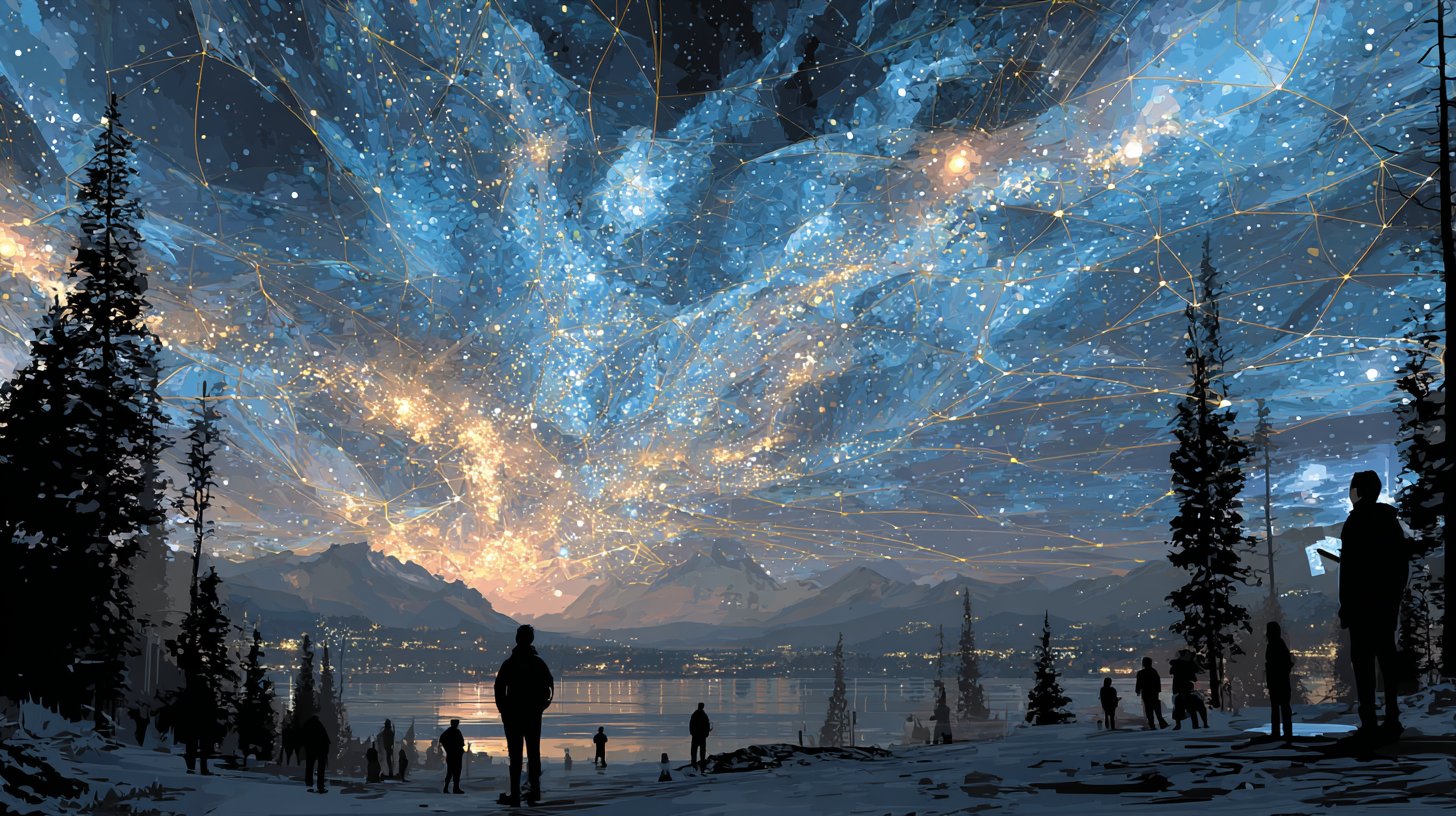
The history and evolution of languages is an exciting and complex topic. Our ancestors sought ways to understand and describe the world around them. The sky, with its shining stars and moving planets, was a significant element of their environment. They began to observe celestial phenomena and give them names, which shaped not only their cultural identity but also their dialects. Whether it was about the entire night sky or specific constellations – everything had meaning and was preserved in the form of stories and words.
The Legacy of Constellations
Constellations are more than just arrangements of stars in formations. Many cultures, from the ancient Egyptians to the indigenous peoples of the Americas, had their interpretations of the constellations. These became part of their mythologies told through language. For example, among the Germans, the Great Bear was an important symbol for navigation and understanding the seasons. The names and stories that arose around these constellations were passed down through generations and influenced the different dialects. Thus, one can say that astronomy directly entered into the language by helping people communicate important concepts about the passage of time and orientation.
But not only did the sky inspire language, but language, in turn, also influenced astronomy. Many ancient peoples developed specific terms and expressions for various celestial phenomena, such as lunar phases or solar positions. These specific vocabulary words helped people accurately document their observations and thus enabled the development of astronomical knowledge. The calculation of time and calendars was significantly influenced by these linguistic developments, and without them, the science of astronomy would not be where it is today.
Dialects in the Course of Time
The connection between astronomy and language becomes particularly evident when we look at how dialects emerge and change. Dialects are essentially regional variants of a language, shaped by various factors, including geographical location, historical events, and cultural influences. When we consider astronomy, we can see how certain celestial phenomena visible in specific areas may influence the vocabulary and expressions of people in those regions. For example, a dialect in an area where the North Star is particularly prominently visible might develop specific terms related to this constellation.
The ongoing development of languages is also evident in modern times, where many astronomical terms are making their way into our everyday language. Words like 'galaxy' or 'cosmic' are no longer just understood by astronomers but are also used in popular culture. This not only describes the acceptance of multiple cognitive perspectives but also how closely science is linked to our everyday language use. The interconnection of language and astronomy is an impressive example of how science infiltrates our cultural identity.
The Influence of Technology
With the advent of new technologies, the possibilities for astronomy and linguistic expression have also changed. Today, smartphones and apps offer a platform to observe and name the stars directly from one's balcony. These new technologies make it easier to understand astronomical concepts and process them linguistically. At the same time, they also influence how people share their experiences on social networks, leading to the emergence of new dialects that spread online across various platforms.
The latest developments in the way we communicate and process information clearly show that the connection between astronomy and language continues to thrive in the digital world. The fascination with the night sky remains, and with every new advance in astronomy, we learn not only more about the universe but also simultaneously expand our vocabulary and the ways we talk about our world.
In conclusion, it can be said that the relationship between astronomy and language is deeply rooted and has far-reaching consequences for the development of dialects. The sky has inspired our ancestors and continues to do so, equipping us with stories and words that shape our identity. It is up to us to recognize these connections and utilize them in our daily lives. After all, the saying 'We are what we speak' is not just a cliché, but a true reflection of our relationship with our existing sky and the endless possibilities it offers us.