Astronomy in Education
How Astronomy Can Enrich School Education
M
Astronomy, education, concepts! The world of stars and planets has fascinated people for centuries. In an era where technology-supported learning is becoming increasingly important, it is essential that you as a teacher or learner implement the concepts of astronomy in education. This not only conveys knowledge but also sparks enthusiasm for science. In this article, we will look at how astronomy can be implemented in school education and what positive effects it has on students.

Teaching is often a challenge, especially when it comes to making complex and abstract concepts comprehensible. Astronomy offers a unique opportunity to make lessons exciting and interactive. With its vast subject matter, ranging from the planets of our solar system to mysterious black holes, astronomy captures students' attention in a way that many other subjects cannot achieve. The use of planetary models, interactive apps, and even excursions to observatories or planetariums can make learning more vivid. This is not only about conveying knowledge but also about fostering critical analytical thinking and problem-solving.
The Role of Technology
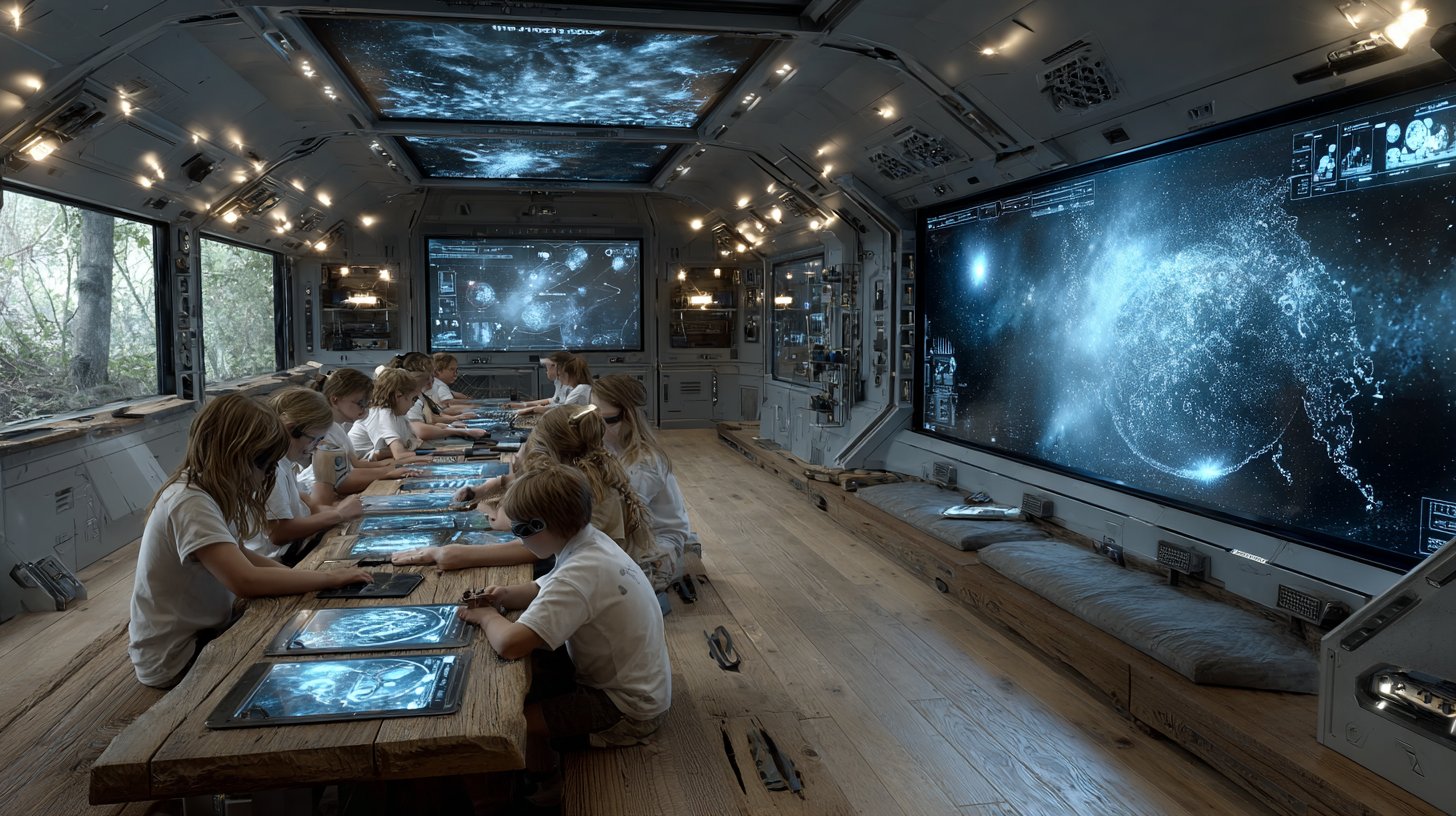
Technology plays a crucial role in conveying astronomical concepts. With the introduction of Virtual Reality (VR) and Augmented Reality (AR), students can immerse themselves in another world – the world of stars and planets. Imagine being on Mars or floating through the solar system while experiencing the various celestial bodies. Such technologies make it possible not only to acquire theoretical knowledge but also to gain practical experience. Apps like 'SkySafari' or 'Star Walk' allow students to explore the night sky just by holding their smartphone up. This interactivity and visual representation make learning not only more effective but also more enjoyable.
Practical Applications and Experiments
In addition to theory, it is important for students to experience practical applications in astronomy. Organizing experiments, such as building a small telescope or simulating planetary systems in the classroom, can lead to a deeper understanding. This type of learning challenges students to think creatively and rely on scientific methods. Astronomy projects or competitions, such as building models of the solar system or actual observational contests, promote teamwork and enhance students' social skills. It is not only about acquiring knowledge but also about developing values like teamwork, communication, and responsibility.

Fostering Fascination and Inspiration
Another important aspect of implementing astronomical concepts in education is the ability to spark interest and passion for the natural sciences. When students see how fascinating the universe can be – from the bright nebulae to the distant galaxies – their curiosity and motivation increase. Astronomy can serve as a springboard to excite students for other scientific subjects. Special events, like 'Night of the Stars', are becoming increasingly popular and attract many families and students. These experiences can deepen interest to the point where students decide to pursue a career in science later on.
In summary, implementing astronomical concepts in school education not only enriches the curriculum but also takes students on an exciting journey into the vastness of the universe. The combination of technology, practical experiments, and fascination with the stars positively impacts the development of various skills. So if you are involved in education, consider how you can integrate astronomy into your lessons. Let students discover the wonders of the universe and be inspired to discover their own curiosity and creativity. In this way, school education becomes not only educational but also an exciting adventure!