Magic of the Northern Lights
The Captivating Story of the Aurora Borealis
E
The Aurora Borealis, also known as the Northern Lights, has fascinated people for centuries. Its mystical beauty and the scientific explanations behind it draw people to the most remote places in the world to experience this natural spectacle. In this article, we dive into the world of the Aurora and discover both the magic and the science behind this fascinating phenomenon.

The Northern Lights appear in various colors and shapes, dancing in the sky in a mesmerizing play of light. Many people travel to northern regions, such as Norway, Finland, or Iceland, to experience the best viewing conditions. But what exactly causes these beautiful lights? To truly understand the Aurora, we need to delve into the science behind this spectacular display.
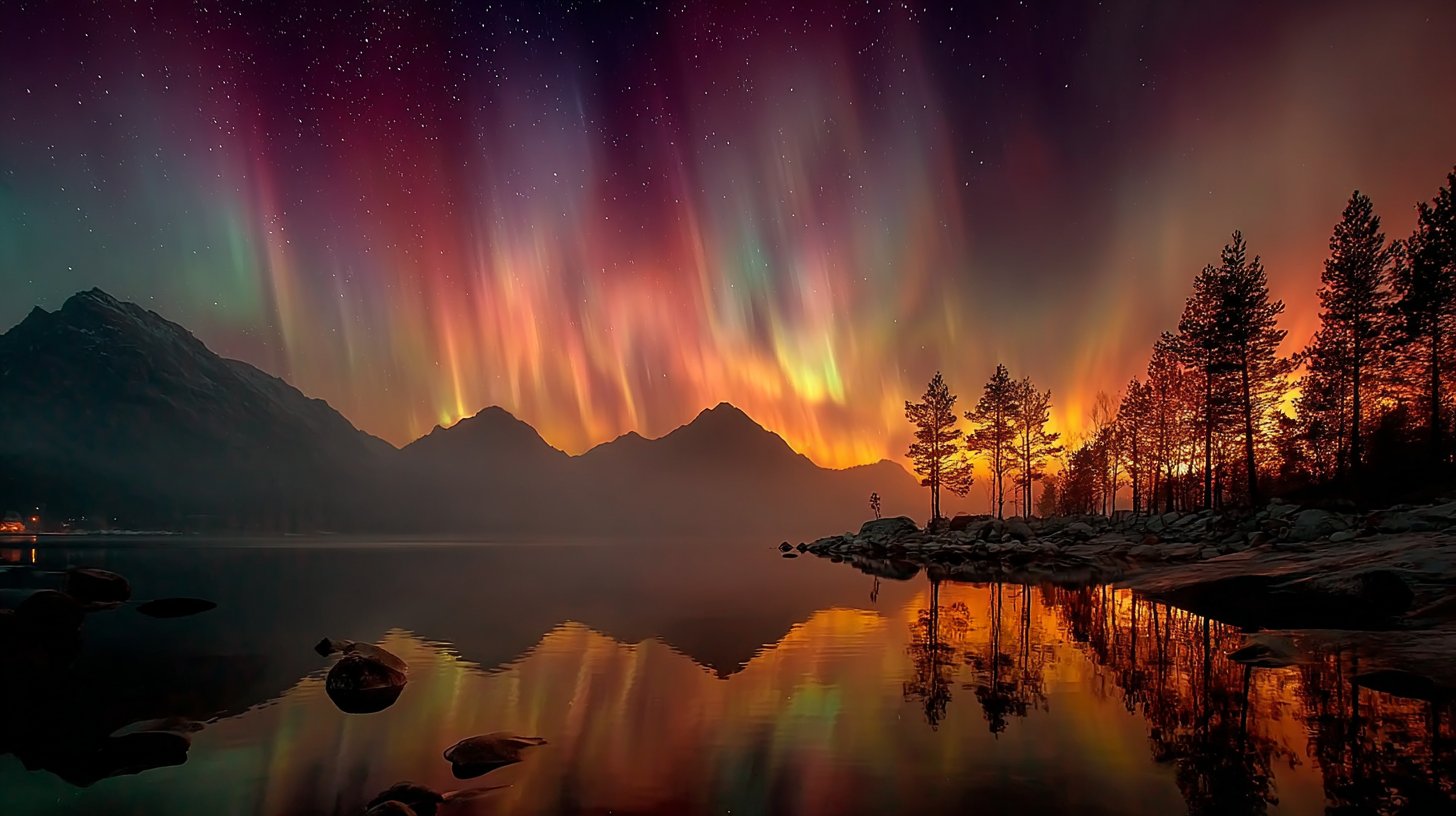
What are the Northern Lights?
The Aurora Borealis, often regarded as a sign of the onset of winter, occurs when charged particles from the sun collide with the Earth's atmosphere. This phenomenon primarily happens during solar eruptions when large amounts of solar wind reach our magnetosphere. The particles collide with molecules in the upper atmosphere, producing light. These light displays are often visible in shades of green, but can also take on red, blue, and violet hues, depending on the types of gas particles involved.
The Northern Lights are not only beautiful but also symbolic of the connection between the Earth and the sky. In many cultures, they have been interpreted as signs. In Norse mythology, for example, they were believed to be the souls of fallen warriors. Furthermore, many peoples see the lights as messages or prophecies. Whether one prefers the scientific or spiritual explanations, the fascination remains the same.
The Best Places to See the Auroras
To provide an optimal experience, there are some regions known for their unforgettable light shows. Places like Tromsø in Norway or the Abisko National Park in Sweden offer not only great visibility but also a unique landscape that enhances the experience. Often, special tours are offered that focus on seeking the best Aurora conditions. It can also be helpful to use apps or websites that monitor solar activity in real time and provide predictions for the best viewing conditions.
In today's world, it is also possible to observe the Northern Lights in other parts of the world where the climate permits. In parts of Canada, Alaska, and even Scotland, the lights have become more visible, expanding the opportunities to experience the beauty of the Auroras. But remember: patience is key, as the best viewing conditions are often unpredictable and can vary from night to night.

The Scientific Significance of the Auroras
The Northern Lights are not just a beautiful sight; they also have deeper scientific meanings. Chemists and physicists use them to learn more about the Earth's atmosphere and the impact of solar activity on our climate. Moreover, the Northern Lights are at the center of discussions about climate change and the effects of solar activity on weather. They also retain an important functional role in enhancing our understanding of the magnetic field and areas of physics concerned with ionized particles.
Understanding the Northern Lights and their causes can also help make predictions about future solar storms that could potentially impact satellite communication and power networks. This means that what appears as a beautiful display in the sky also provides critical information about the interplay between the Earth and the sun.
In conclusion, it can be said that the Northern Lights are a fascinating example of the connection between beauty and science. They offer us not only breathtaking views but also open the door to a deeper understanding of our planet and the cosmic forces that influence it. Whether you are a passionate nature lover, a scientist, or simply a traveler seeking the next great adventure, the Aurora Borealis is an experience you should not miss.
Take the time to observe the Aurora and experience the magic for yourself. It reminds us of how beautiful and mysterious the world around us is. The light of the Aurora will always remain a symbol of our longing for the unknown and the pursuit of wonder.